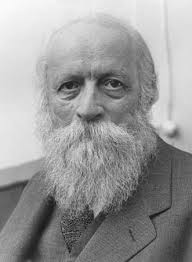
 Emmanuel Levinas discusses Martin Buber’s concept of truth and his theory of knowledge in an article, “Martin Buber and the Theory of Knowledge”. At the end of his article, he asks – “Does not the ethical begin only at the point where the I becomes conscious of the Thou as beyond itself?” I take this question to be my point of departure and this article can be seen as thinking about this question, and in some ways, a response to it.
Levinas here directs himself to the “reciprocity of the I-Thou relation”. Levinas assumes that the reciprocity of this relation implies that I and Thou are formally interchangeable, that is, the structure of the relation does not differentiate in terms of ‘the dimension of height’ between the I and the Thou. The ethical for Levinas begins with the otherness of the other, the dimension of height and thus consciousness of otherness is critical. He tries to derive this consciousness in the Umfassung, the inclusion – “But is it not, after all, in consciousness that Zwischen and Umfassung are revealed?”
Buber in his ‘replies to my critics’ addresses himself to Levinas’ objection: “… very different from this is another misunderstanding. Levinas cites my statement that through Thou, I become I, and infers: hence I owe my place to my partner. No: rather the relation to him. Only in the relation is he my Thou: outside of the relation between us this Thou does not exist. It is, consequently, false to say that the meeting is reversible. Neither is my Thou identical with the I of the other nor his Thou with my I. In the person of the other I owe the fact that I have the Thou, but my I – by which here the I of the I-Thou relationship is to be understood – I owe to saying Thou, not to the person whom I say Thou.”
But the formalism of the I-Thou relation to which Levinas objects – that the otherness of the other cannot be a part of – is not of concern in so far as the I is reversible with the Thou, but is of concern because the individuality of the I is brought out only in consciousness, and it here that we are presented with the otherness of the other. Buber, therefore, does not really address himself to Levinas’ concerns, That is, what is the nature of consciousness in the I-Thou relation. “It should also be shown how the ‘space’ ‘deforms’, transforms and inverts the act of immediate awareness…”
I have taken my point of departure from Levinas’ question, but I must retrace this analysis of Buber’s theory of knowledge to bring out what I believe to be a fundamental problem in the concept of Umfassung or inclusion.
 The philosophy of Darryl Naranjit