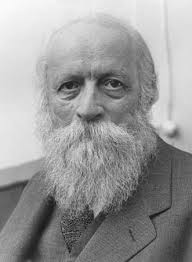
 Levinas notes, “For contemporary thought, the history of the theory of knowledge is synonymous with the history of the vanishing of the subject object problem.” The epistemological problem for contemporary thought is the resolution of the radical separation between subject and object. For in saying that the only certainty in true knowledge, or the only condition of knowledge is privileged access to consciousness, meant that there was no access to what was the other, the object. There could be no act of knowing that got to the object, in its truth.
For Kant, a philosopher for whom Buber had a high regard, the phenomenal aspect of the object was accessible to the subject but only in so far as they were constituted by the categories of the subject. The noumenon remained unknowable, out of reach, out of access. Perhaps we can look at Buber’s epistemology as an attempt that comprised different stages, in coming to grips with the radical disjunction of the subject and object, and taking its point of departure from Kant’s problem of the unknowable noumenon.
It should not be forgotten that the radical separation between subject and object arises from an epistemological problem. In other words, before Descartes, knowledge was the bridge between subject and object, since knowledge was supposed to give access to the object in terms of its qualities and its existence. The object, therefore, was open to the subject through the medium of knowledge, knowledge united subject and object.
From Descartes onwards, knowledge of the object was questioned, subject to doubt. The realm of consciousness was not subject to the same questioning since the ‘cogito ergo sum’ provided for Descartes, a pivot of certainty, a fixed point. However, the interiority of consciousness was in direct opposition to the exteriority of the object, and if interiority was the condition of knowledge, the exteriority became the condition of the impossibility of knowledge. We could not really know the other, the object. It was this removal of knowledge as a means of access to the object that made the object radical in its separation from the subject.
 The philosophy of Darryl Naranjit