Ideological Warfare

cropped-cover111.jpgIn September 2008, the financial markets in the United States collapsed. In just two days, the stock market fell by 700 points. Then, beginning October 6 and continuing for a week, the Dow Jones Industrial Average fell over 1,874 points, or 18%, in its worst ever weekly decline, from both a point and a percentage basis. The Dow, in fact, fell 33.8% in 2008. On September 25, 2008, with Republican Representative Mike Pence of Indiana President Bush, in a Presidential address to the nation, spoke about the crisis and outlined a plan to the American nation for a $700 billion bail out package. On Fox News that same evening, Newt Gingrich described the plan as the introduction of socialism in America. In a discussion about the bailout, Sean Hannity, on the same channel, called it the biggest expansion of government in American history. (Foxnews.com 2008)

All of this was happening during one of the most intensely fought Presidential campaigns in American history between Barack Obama and John McCain. The contest brought two opposing views in stark relief against each other. Obama, during his campaign, disparaged the “trickle down” economic theory of creating wealth, while his opponent John McCain lauded the idea of tax cuts to big corporations as the way to create jobs and prosperity.

In an article, “Comrade Bush and the Banks”, one syndicated columnist wrote:

The current proposal by the US Treasury to spend US$600 billion of tax-payers’ money buying up the worst of the sub-prime mortgages only emphasizes how far we have traveled from the triumphalism of the free-marketeers in just a few months. Just as China has developed a “socialist economy with Chinese characteristics,” so the US is getting a socialist economy with American characteristics…The panicky flight from free-market orthodoxy in the United States is bound to fuel a revival of government intervention and welfare-state policies in the rest of the world. (Dyer 2008).

The crisis in the American financial system brought to the fore the difference between two positions on economic theory after the dissolution of the Keynesian consensus. These positions can be described without much dispute as the ‘liberal’ (as espoused by say, Paul Krugman, and not to be confused with neo-liberalism) or possibly ‘neo-Keynesian’ approach, and the ‘conservative’ (as espoused by say, Milton Friedman) approach to economics. Liberals, for example, feel that government spending is the way to stimulate the economy; conservatives advocate tax cuts, particularly to big business, as the best means of stimulating the economy.

There has not been a consensus on one particular economic paradigm. As such, the debate waged between these approaches can perhaps be accurately described as ideological warfare. Each side brings out its heavyweight economists to validate its position. The weapons utilized in this battle are not so much objective scientific evidence as rhetoric, salesmanship, propaganda and spin. How do we, in these circumstances, determine the worth of the arguments on each side? In fact, can this be done at all or is it a partisan ideological struggle? Certainly, however, the nature of this ideological warfare can be studied and analyzed. Such an analysis will yield a great deal of insight into the reasons why a particular position is taken up.

Ideological Warfare

cropped-cover111.jpgIn the Caribbean, we were faced with our own crisis. In January 2009 in Trinidad and Tobago, CL Financial (originally CLICO – Caribbean Life Insurance Company), one of the islands biggest conglomerates, which controlled approximately 25% of the country’s economy, had to be bailed out by the government. In the Caribbean, however, the crisis has not been defined as the conflict between liberal and conservative economics. There are, however, some common issues. In the 1980’s, Reaganomics became influential in the Caribbean because of the Structural Adjustment policies which were promoted by the IMF and the World Bank in that era – the so-called “Washington Consensus” – which preached privatization, trade liberalization, deregulation and in general neoliberal economics. “Trickle-down” economics, as Reaganomics was called, became the order of the day.

In the period preceding the 1980’s, however, Keynesian ideas and socialist ideas were prevalent in the Caribbean. In Trinidad and Tobago, the PNM, under Dr. Eric Williams had professed a Keynesian model, i.e. a mixed economy; in Guyana, both Dr. Jagan and Forbes Burnham proposed socialist or Marxist models; in Jamaica, the PNP, under the leadership of Michael Manley, also put forward a socialist model; in Grenada, the PRG, under Maurice Bishop installed a Marxist model. So generally speaking, the Caribbean had favored a socialist or Keynesian approach to the economy. Manley himself became an eminent spokesman for the Third World, advocating a New International Economic Order (NEIO).

By the mid 1980’s, however, most governments in the region were adopting some form of Reaganomics that included deregulation, divestment, privatization, etc. In Trinidad and Tobago, the NAR came into power and introduced Structural Adjustment Policies (SAP’s); in Jamaica, Michael Manley was forced to adopt what was called the “zig zag” policy under pressure from the IMF and SAP’s were implemented; in Guyana, under the Hoyte administration, SAP’s were also implemented. Contemporaneously with the introduction of SAP’s, those who championed free-market policies emerged as the dominant voices in the society.

Perry Mars has looked at the rightward change of the Caribbean Left in Ideology and Change: The Transformation of the Caribbean Left. He defines the Caribbean Left as including:

…reformist politics at one end of the spectrum, and radical and revolutionary political movements and activities at the other. The Left, therefore, represents a varied array of agencies which challenge established precepts of the international and domestic status quo, and seeks to initiate change or relevant alternatives to the prevailing class structures within the established political system. (Mars 1998, xiii).

He attributes this change to “the relentless pressures towards ideological conformity stemming from the international capitalist environment, coupled with the consequential elitist and factional tendencies on the part of the Left leadership as a whole, would seem to be the most significant sources of the debacle” (Mars 1998, xiv). This study seeks to investigate in a more detailed manner this rightward shift in the Caribbean of the Left as defined by Mars, and in particular to look at the aggressive ideological warfare waged by the conservatives, who came to power in the Reagan Administration (and I want to deal in particular with those who are labeled ‘neoconservative’). This event, it is argued, transformed the World Bank policies from that based on a liberal worldview to that of one based on a conservative worldview. The result was the “Washington Consensus”, or what is popularly called “neo-liberalism” in the Caribbean. I should state from the outset that ‘Caribbean’ within the scope of this study refers to the Commonwealth Caribbean countries, in particular Jamaica, Trinidad and Tobago and Guyana.

What caused the change in Caribbean societies and Governments that were essentially Keynesian, socialist or Marxist to governments that supported free market policies and right leaning tendencies? What caused this replacement in ideology, from a left-leaning one in the 60’s and 70’s, to a right-leaning or conservative ideology in the 80’s, in the Caribbean – specifically in Trinidad and Tobago, Jamaica and Guyana? This study will seek to answer this question. Other relevant questions posed are: What was the impact of conservatism (more accurately – neoconservatism) on World Bank policy? What were the different processes by which SAP’s were imposed on Jamaica, Trinidad and Tobago and Guyana?


Leo Strauss, Nietzsche and Neoconservatism

2D Perhaps one of the most important aspects of Strauss’s philosophy is his distinction between the ‘esoteric’ and the ‘exoteric’. For Strauss, the very possibility of political science lies in this distinction. What was of great importance was this distinction between what was said or written for public consumption and what was implied or meant for the discerning hearer or reader. Here Strauss appears to be deeply influenced by Nietzsche and his style of masking what he meant and his claim that only what is masked is profound. Steven Smith, a noted defender of Strauss who insists that “Strauss was not a Nietzschean” (Smith, 2006, 9), writes of Strauss, “…he did carry with him something of Nietzsche’s love of masking others and his desire to hide behind masks of his own making. No one can claim to have read Strauss seriously without attaining an appreciation for the immense sense of playfulness, of hide and seek, that attends to his manner of reading and writing” (Smith, 2006, 10).

Indeed in his book, Leo Strauss and Nietzsche, Laurence Lampert, a respected Nietzschean scholar, argues for the decisive influence that Nietzsche has on Strauss. In commenting on an essay on Nietzsche written by Strauss entitled “Note on the Plan of Nietzsche’s Beyond Good and Evil”, Lampert says: “Leo Strauss’s Nietzsche is the best Nietzsche yet, the one nearest to the still almost secret Nietzsche of Nietzsche’s great books. I believe that it is not too much to say that Strauss’s essay is the most comprehensive and profound study ever published on Nietzsche” (Lampert, 1996, 1,2).

It has been suggested that there are three important areas where Strauss is influenced by Nietzsche (Drury, 1997; Lampert, 1996):

  • As already mentioned, the distinction between the ‘esoteric’ and the ‘exoteric’, where Nietzsche seeks to convey his message to particular people while covering up or disguising his meaning to others. Strauss is said to have an esoteric teaching and an exoteric one.
  • The relationship of truth or knowledge to power. To Nietzsche, the ‘will to power’ is fundamental. ‘Truth’, if it can be called that, is a product of the will to power. Various truths serve the interests of particular groups’ ‘will to power’. Thus for Nietzsche, liberalism, socialism, Christianity were all ideologies that served the interests of the weak; they were the result of the ‘ressentiment’ of the weak against the strong. The outcome of this is that morality is linked to the will to power, and it establishes an ethics that is “beyond good and evil”. For Drury and others, Strauss’s philosopher is beyond good and evil.
  • The idea of ‘radical elitism’ or ‘aristocratic egoism’. For Nietzsche there is a hierarchy of values based on a natural aristocracy. Nobles create values that are good by virtue of the fact that they emanate from the noble. What is good and healthy for society is then that which serves the interests of the healthy and the strong. Nietzsche thus proposes that the ‘philosophers of the future’ will engage in a ‘transvaluation of values’. Strauss emphasizes the hierarchical aspect of nature.


In Persecution and the Art of Writing, Strauss argues that philosophers have to mask their ideas so as not to be persecuted by society. The philosopher guides and leads in secret; hidden behind his esoteric writings, he guides the masses by appearing to promote the conventional values of society but in reality is advancing his hidden agenda (Strauss, 1977).  Strauss, according to Lampert, wishes to advance Nietzsche’s rule of philosophy through the ‘transvaluation of values’, with which Nietzsche declared that the ‘philosophers of the future’ will be concerned.

Leo Strauss, Nietzsche and Neoconservatism

2DIn 2003, President George W Bush invaded Iraq. His reason was that Iraq possessed ‘weapons of mass destruction’ which made it a threat to America and American interests. The occupation of Iraq still continues in 2008, more than 3900 America soldiers have been killed so far in that war along with innumerable Iraqi civilians. The World Health Organization claims that almost 150,000 Iraqis civilians were killed from 2002 to 2006 (World Health Organization). In 2006, a survey was conducted by Iraqi physicians under the direction of epidemiologists at Johns Hopkins University’s Bloomberg School of Public Health, published in the British medical journal, the Lancet, found the US invasion and occupation were responsible for 655,000 Iraqi deaths during the same time (Spencer, 2008).

Critics have claimed that the invasion of Iraq was done under false pretenses, since no weapons of mass destruction were found (Centre for Public Integrity, 2008).The invasion of Iraq has been defended in terms of the ‘spreading of democracy’ globally. In his inaugural address after his swearing-in ceremony, Bush said,”It is the policy of the United States to seek and support the growth of democratic movements and institutions in every nation and culture, with the ultimate goal of ending tyranny in our world,” (CNN.com, January, 20, 2005). It is appropriate to ask, however, whether democracy can be established through the barrel of a gun.

It has been also linked to the ‘war against terror’. However, many insist that Al Qaeda had no real links to Saddam Hussein and that the invasion of Iraq diverted from the real war against Al Qaeda in Afghanistan (Centre for Public Integrity, 2008; Hersh, 2003). There has been a great deal of concern about the Bush administration’s doctrine of ‘spreading democracy’ and America’s willingness to act unilaterally without the approval of the United Nations. Critics have asked if this doctrine does not give to America justification for arbitrary intervention in any part of the world where the American President considers that there is dissatisfaction with the regime that is in power.David Gergen, a former adviser to previous Presidents Reagan and Clinton, said of Bush’s address, “[It’s] historically significant because I think he’s revealed to us today his strategy to win the war on terrorism is far more ambitious than we ever imagined, …It’s not simply going after Iraq and getting rid of Saddam [Hussein], nor is it simply going after al Qaeda. It is rather to expand and extend liberty across much of the world…No other American president has ever committed himself in an inaugural as fully as this to that kind of aggressive, foreign policy.” (CNN.com, January 20, 2005) The Bush administration has been linked to neoconservative ideology and some theorists have claimed that the aggressive foreign policy pursued by that administration stems from that neoconservative ideology.

Certainly, the rest of the world, particularly developing countries, needs to understand clearly what this ‘aggressive foreign policy’ implies. They may be the targets of this policy. This ‘aggressive foreign policy’ has been a hallmark of neo-conservatism and the Project for the New American Century (PNAC). According to Mel Gurtov, “The group [PNAC] was formed in 1997 to advance the neo-cons’ cause, which they defined as ‘hard-headed internationalism’. The group’s choice of name could hardly have been accidental, for its arguments echoed those of Henry Luce’s ‘American Century’ speech over fifty years earlier: US power and ideals needed to assume centre stage in world affairs. Ronald Reagan was its hero…” (Gurtov, 2006, 28).

Ronald Reagan, it is said, transformed American politics and brought conservatism to prominence in the 1980’s.  John Ehrman in The Eighties: America in the Age of Reagan, says, “By 1989, conservatives not only had shown that they could govern successfully but also had established their movement as the dominant force in American politics.” (Ehrman, 2005, 2). The dissolution of the ‘liberal consensus’ in the 1970’s provided the opportunity for the conservatives. Neo-conservatism seemed to be the most aggressive part of the conservative movement, particularly in terms of the foreign policy agenda. The rise of neo-conservativism during the 1980’s has been linked to the ascension of President Reagan in the United States (Gurtov, 2006, 28-36).

Certainly, in America a number of intellectuals, most noticeably William Buckley, Frank Meyer, James Burnham, Alan Bloom, and Irving Kristol had been articulating the conservative position. Economists such as Milton Friedman and Freidrich Hayek had been promoting a neo-classical economic model. However, behind all of this, the philosophy of Leo Strauss lurks in the background. Strauss has been claimed as the mastermind behind neo-conservatism and the Iraq war. In The Truth about Leo Strauss, Catherine and Michael Zuckert write, “A spectre is haunting America, and that specter is, strange to say, Leo Strauss” (Zuckert and Zuckert, 2006, 1). Thomas Pangle writes, “As the years pass that slowly distance us from the lifetime of Leo Strauss (1899-1973), his thought grows into the future with a reach and significance rivaled by very few of his twentieth-century contemporaries” (Pangle, 2006, 1), and further, Pangle claims that “Strauss’s iconoclastic writings have long exercised a profound subterranean cultural influence, which is now emerging more and more into broad daylight, especially among the rising younger generation” (Pangle, 2006, 1).

Considered by many as the ‘godfather’ of the Republicans 1994 contract with America, Leo Strauss has had what historian Gordon Wood described as the “largest academic movement in the twentieth century”(Drury, 1997, 2). Shadia Drury writes, “What seems more surprising than his influence inside the academy is the influence that Strauss has exerted on American politics. Strauss students and their students have occupied important positions in the Reagan and Bush administrations and continue to play a significant role within the Republican Party”(Drury, 1997, 3). Others have written of the importance of Strauss’s influence on the neo-conservative movement(Devigne, 1994; Wood, 1988; Drury, 1997; LaRouche). Strauss has been considered by some, therefore, as one of the leading influences on the conservative movement and indeed also on neo-conservatism. A fractious controversy about Strauss has been stirred up. Is Strauss the eminence grise of the neoconservative movement, the Iraq war and the aggressive American foreign policy? And is he a follower of Nietzsche?

Habermas and the theory of communicative action.

habermasAt the core of Habermas’ philosophy is the theory of communicative action. One can say that almost the entire structure of his philosophy rests upon that theoretical foundation. As Dietz and Widdershoven say in “Speech Acts or Communicative Action?”

“Central to Habermas’ philosophy is the distinction between strategic and communicative action. When involved in strategic action, the participants strive after their own private goals. In doing so they may either compete or cooperate, depending on whether their goals oppose each other or rather coincide. When they cooperate, they only are motivated empirically to do so: they try to maximize their own profit or minimize their own losses. When involved in communicative action, the participants are oriented towards mutual agreement. The motivation for cooperation therefore is not empirical but rational: people respond e.g. to requests because they presuppose that these requests can be justified. The basic condition for communicative action is that the participants achieve a common definition of the situation in which they find themselves. This consensus is reached by negotiations about the validity claims raised (Habermas, 1981, I, p.25  ff).” Not all communication is teleological or purposive (strategic), communication may also be directed towards “mutual agreement”. The book “Communication, Intention and Reality” rejects Habermas’ claim and shows that all communication is purposive, arguing that “mutual agreement” can contain a strategic component. Such an argument undercuts the entire structure of Habermas’ philosophy and brings into question its integrity.

The subject-object divide

buber2Levinas notes, “For contemporary thought, the history of the theory of knowledge is synonymous with the history of the vanishing of the subject object problem.” The epistemological problem for contemporary thought is the resolution of the radical separation between subject and object. For in saying that the only certainty in true knowledge, or the only condition of knowledge is privileged access to consciousness, meant that there was no access to what was the other, the object. There could be no act of knowing that got to the object, in its truth.

For Kant, a philosopher for whom Buber had a high regard, the phenomenal aspect of the object was accessible to the subject but only in so far as they were constituted by the categories of the subject. The noumenon remained unknowable, out of reach, out of access. Perhaps we can look at Buber’s epistemology as an attempt that comprised different stages, in coming to grips with the radical disjunction of the subject and object, and taking its point of departure from Kant’s problem of the unknowable noumenon.

It should not be forgotten that the radical separation between subject and object arises from an epistemological problem. In other words, before Descartes, knowledge was the bridge between subject and object, since knowledge was supposed to give access to the object in terms of its qualities and its existence. The object, therefore, was open to the subject through the medium of knowledge, knowledge united subject and object.

From Descartes onwards, knowledge of the object was questioned, subject to doubt. The realm of consciousness was not subject to the same questioning since the ‘cogito ergo sum’ provided for Descartes, a pivot of certainty, a fixed point. However, the interiority of consciousness was in direct opposition to the exteriority of the object, and if interiority was the condition of knowledge, the exteriority became the condition of the impossibility of knowledge. We could not really know the other, the object. It was this removal of knowledge as a means of access to the object that made the object radical in its separation from the subject.

Truth and Power: Gandhi’s Political Philosophy

truthandpower2 (1)Mahatma Gandhi was a revolutionary thinker. Underneath the simple words and phrases that appear almost as platitudes, there is a meaning, a philosophy that challenges modern Western thought at its core. This book is written as an attempt to uncover the meanings hidden in those simple words and phrases.

Gandhi used the term satyagraha to name the strategy and philosophy he was using. The word satyagraha literally translated means ‘truth-force’. On September 11, 1906, in South Africa, Gandhi explained his use of the term. “None of us knew what name to give to our movement. I then used the term passive resistance in describing it. I did not quite understand the implications of passive resistance as I called it. I only knew that some new principle had come into being. As the struggle advanced, the phrase passive resistance gave rise to confusion and it appeared shameful to permit this great struggle to be known only by an English name. Again, that foreign phrase could hardly pass as current coin among the community. A small prize was therefore announced in Indian Opinion to be awarded to the reader who invented the best designation for our struggle. We thus received a number of suggestions. The meaning of the struggle had been then fully discussed in Indian Opinion and the competitors for the prize had fairly sufficient material to serve as a basis for their exploration. Shri Maganlal Gandhi was one of the competitors and he suggested the word Sadagraha, meaning firmness in a good cause. I liked the word, but it did not fully represent the whole idea I wished it to connote. I therefore corrected it to Satyagraha. Truth (Satya) implies love, and firmness (agraha) engenders and therefore serves as a synonym for force. I thus began to call the Indian movement Satyagraha, that is to say, the Force which is born of Truth.”

Descartes and the horizon of modern epistemology

descartesThe subject-object confrontation in which the subject has no privileged position really begins with Descartes. Before Descartes, the questioning of the epistemological qualification of the subject was not an issue. The subject, qua knower, was a pivot of certainty. What was questioned was “How can a being, subject to error, touch the absolute being without impairing its absolute character?” Epistemology was concerned, therefore, with the nature of knowledge, the necessary conditions for knowledge and questions that investigated knowledge. With Descartes a new epistemological horizon appeared, for Descartes was concerned with the very possibility of knowledge. How can we know anything for certain? “The individual existent who aspires to truth is radically separated from being as such”. This radical separation of subject and object arises in fact from the resolution of the epistemological problem that Descartes posed to himself. Having put to himself the question of the very possibility of knowledge, Descartes, in resolving this through the ‘cogito ergo sum’, could have privileged access only to the realm of internal consciousness. So whereas before the epistemological was restricted to within the horizon of the privileged position of the knowing subject (the knower), by Descartes’ radical questioning of the possibility of knowledge itself, the access was restricted even further, not as before to the person, but now to the subject qua consciousness.

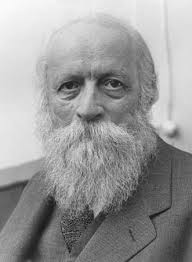
Martin Buber and the prison of Umfassung

buber2Emmanuel Levinas discusses Martin Buber’s concept of truth and his theory of knowledge in an article, “Martin Buber and the Theory of Knowledge”. At the end of his article, he asks – “Does not the ethical begin only at the point where the I becomes conscious of the Thou as beyond itself?” I take this question to be my point of departure and this article can be seen as thinking about this question, and in some ways, a response to it.

Levinas here directs himself to the “reciprocity of the I-Thou relation”. Levinas assumes that the reciprocity of this relation implies that I and Thou are formally interchangeable, that is, the structure of the relation does not differentiate in terms of ‘the dimension of height’ between the I and the Thou. The ethical for Levinas begins with the otherness of the other, the dimension of height and thus consciousness of otherness is critical. He tries to derive this consciousness in the Umfassung, the inclusion – “But is it not, after all, in consciousness that Zwischen and Umfassung are revealed?”

Buber in his ‘replies to my critics’ addresses himself to Levinas’ objection: “… very different from this is another misunderstanding. Levinas cites my statement that through Thou, I become I, and infers: hence I owe my place to my partner. No: rather the relation to him. Only in the relation is he my Thou: outside of the relation between us this Thou does not exist. It is, consequently, false to say that the meeting is reversible. Neither is my Thou identical with the I of the other nor his Thou with my I. In the person of the other I owe the fact that I have the Thou, but my I – by which here the I of the I-Thou relationship is to be understood – I owe to saying Thou, not to the person whom I say Thou.”

But the formalism of the I-Thou relation to which Levinas objects – that the otherness of the other cannot be a part of – is not of concern in so far as the I is reversible with the Thou, but is of concern because the individuality of the I is brought out only in consciousness, and it here that we are presented with the otherness of the other. Buber, therefore, does not really address himself to Levinas’ concerns, That is, what is the nature of consciousness in the I-Thou relation. “It should also be shown how the ‘space’ ‘deforms’, transforms and inverts the act of immediate awareness…”


I have taken my point of departure from Levinas’ question, but I must retrace this analysis of Buber’s theory of knowledge to bring out what I believe to be a fundamental problem in the concept of Umfassung or inclusion.

Martin Buber and Spinoza

buber2Martin Buber differentiates between the I/Thou and the I/It relationship.  The I/It relationship objectifies what is presented as ‘otherness’ to the I, while the I/Thou relationship presents what is other in the form of a meeting between those engage in a dialogue. The I/Thou addresses the other, while the I/It expresses the other. Buber’s critique of Spinoza is intimately tied in to this differentiation. Spinoza ends up interpreting reality as a philosopher because ultimately being is reduced to being objectified and empirically examined in his analysis. The distinction can then be made between the philosopher whose relationship with being can be described as I/It, and the prophet whose relationship is one of I/Thou. The one tradition giving rise to reason as the final arbiter of reality, while the other tradition gives rise to revelation as the final arbiter. So how does reason and revelation stand in relationship to each other? Can the philosopher and the prophet find common ground?  Can reason and revelation be reconciled?